
How to Clean a Rat Cage: Our Rat Cage Cleaning Schedule
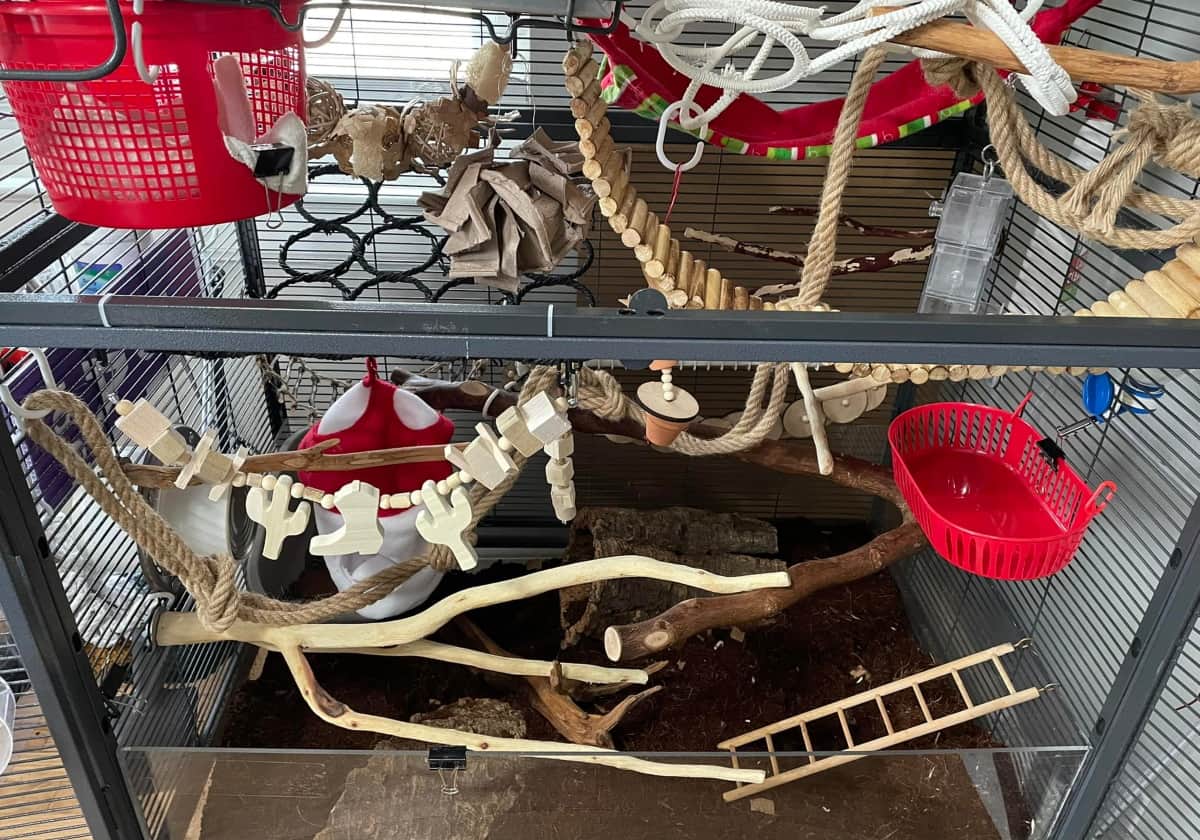
Keeping your rats’ cage clean, odor-free and healthy requires some regular effort. Rats themselves are actually very clean animals who routinely groom themselves and can be litter trained. But any home gets grubby with time, so our rats still need our help with the housework.
Why is It Important to Regularly Clean the Rat Cage?
When rats pee, bacteria starts to turn the urine into ammonia. Inhaling ammonia is bad for everyone (including us), but it is even worse for our rats, who have very sensitive and easily damaged respiratory systems. Rat feces are mostly quite dry, but if they wee on their poos, then the whole lot can descend into a sticky, very stinky and unhealthy mess.
Whilst pee and poo are the biggest causes of smell in a rat cage, rats also have scent glands and their skin secretes oils just like other mammals. Other time these will also make cage furniture dirty and provide a substrate for microbes to thrive.
So, rat cages need to be cleaned, just like houses, to keep everything safe and hygienic, and to prevent them from smelling.
How Often to Clean a Rat Cage?
There is no one right answer to this. It depends on the size of the cage, the number of rats, whether they are litter trained and the type of substrate used.
Generally, if a cage smells, you aren’t cleaning it enough. But fully cleaning it everyday or every couple of days is a bad idea because it will annoy the rats and make them redouble their efforts to mark their territory.
Bioactive cages are a bit different to normal, as the substrate is intended to be changed only very rarely. However, even these need the litter trays and other furniture changing and cleaning on a regular basis.
If you aren’t sure how often to clean your cage, I’d suggest doing a weekly full cleanout until you get a feel for what is right for your group.
What to Clean a Rat Cage With?
Make sure you’re using safe cleaning products, as many household cleaners are toxic to rats. I use F10, an animal-safe veterinary disinfectant for the cages and furnishings, an eco-safe laundry detergent for the hammocks, and an eco-safe dish soap for bowls and water bottles. Basically, if I wouldn’t wash my own cutlery or dish towels in it, I don’t use it.
Remember to rinse everything well. Rats like to chew so any cleaning product residues will be going in their mouths.
Don’t use any scented products – the sensitive ratty respiratory systems will react badly to those too.
Rat Cage Cleaning Tips
Follow these tips for an easier and more efficient cleaning process:
- Rats are extremely curious little fuzzballs, and they find anyone fiddling about with their cage extremely interesting. For spot cleaning and changing the odd litter tray its usually fine to do it with the rats in residence (unless they have cage aggression), although they will try and “help”. However, for any serious cleaning activity it is safer, quicker and easier to put the rats into another cage, their travel carrier, or let them free-range with another human in a safe space.
- Figure out where you want to wash your cages in advance as some of them are pretty big. Popular options include outside on a patio, or for smaller cages, in a bath or shower tub. We use a combination of outside (complete with hose), and for smaller furniture, in the laundry sink.
- Set up a dedicated set of rat cleaning utensils. We have a scrubbing brush, and old dish brush, a dish sponge, a spray bottle which we fill with F10 solution (diluted as per instructions on the F10 bottle), and old towels / dish towels to dry things with.
- For a quick clean, have a spare set of hammocks and cage furniture clean and ready. That way you can swap out the dirty, give the cage a wipe down, put in the fresh furnishings, and let the rats back in to explore their new, offensively clean, home, before doing the washing of the dirty bits and bobs at your own pace.
My Rat Cage Cleaning Schedule
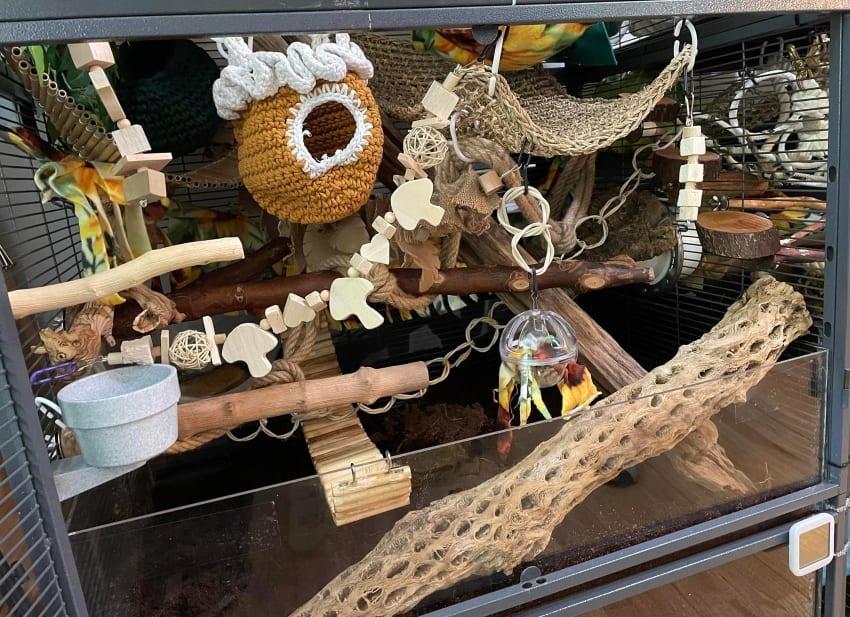
Due to the number of rats and cages I have, my cleaning schedule is a bit like painting the Forth Bridge – there is no beginning or end to the task! However, broadly it can be broken down like this:
Daily Cleaning Activities
- Empty and change any litter trays that are dirty. I define dirty as lots of poos on the surface of the litter, and the litter showing signs of having absorbed urine. Don’t change litter trays with just a few poos in, as the rats use these as cues for where to toilet. I actually move a couple of poos in the clean litter trays as a subtle hint!
- Change or clean the food area or bowls and provide fresh water. I remove any uneaten fresh food (veg etc.) so it doesn’t go moldy, but scatter uneaten dry mix around their substrate.
- If anything is smelling, I do a sniff test to id it, and change it out.
Weekly Activities
For small cages, I do a full strip down and clean of the cage:
- Put the rats in a carrier or other safe place where they can’t help out.
- Open up the cage and remove all the furnishings and bedding/substrate.
- Wipe down the cage base with F10 spray.
- Refurbish the cage with clean items and fresh bedding/substrate.
- Return the rats so they can undo all my good work.
- Go and wash up the dirty furnishings and return them to the storage shelves for next week.
For my rat rooms and big cages, I do a bigger version of the daily clean:
- Move the rats somewhere safe.
- Change all the litter trays.
- Change all the hammocks.
- Change any cardboard boxes that are well used, and swap out any nest sputniks or baskets with soiled paper in.
- If it is a flat based cage, and we aren’t using a loose absorbent substrate, then the cage base is also cleaned out and washed down with the F10 spray.
- Give the rat room a full sweep-up, as the furballs chuck substrate everywhere.
For big cages I don’t change ropes and lesser used furnishings weekly unless they fail the sniff test.
Monthly Activities
Small cages – as weekly, but I take the cage fully apart and give it a good scrub before refurbishing.
Big cages – as weekly, but usually changing dry substrate (kiln dried shavings, hemp, paper etc), ropes / climbing furnishings, and wiping down the bars.
Every two – three months, we take the big cages out and give them a good scrub.
Bioactive cage bases & soil digging boxes – unless the rats are making a serious mess of these I leave them alone. Generally, I only change them if there is a build up of poos in the soil (in which case I spot clean), or if we have a compost gnat outbreak. However, I do disturb tunnels every week to ensure they ventilate properly (if the rats don’t collapse them themselves), as ammonia can build up underground.

Cleaning the Food Bowl and the Water Bottle
Cleaning isn’t just about the cage – it’s important to keep food and water clean too so bacteria can’t build up. I scatter feed my rats their nuggets and dry mix in their loose substrate, but feed them their veggies and wet food on a plate or bowl. The plates and bowls get changed every couple of days, rinsed and then go through the dishwasher.
My rats have both water bottles and water bowls. The water bowls get changed daily as the rats tend to go paddling in them, drop substrate in them, and sometimes even use them for pooping! I give them a new bowl with fresh water, and then wash up the dirty ones with F10 disinfectant in the laundry sink (I draw the line at rat poo in the dishwasher).
Water bottles are changed for fresh water every day or every other day, and then washed out properly weekly. We wash them in the sink with either F10, or a safe dish-washing liquid.
Help, My Rat Peed / Pooped on My Bed / Sofa / Lap!
It happens. The good news is that it is easy to clean up. Rat urine as a one off doesn’t smell much (unlike cat pee) so once it is cleaned there should be no lingering nastiness. And rat poos tend to be pretty solid so are easy to pick up with a tissue without leaving… squishy bits. I just pick up the poos, soak up any urine with a tissue, and then give the upholstery a bit of a scrub with my F10 spray.
Final Thoughts on Rat Cage Cleaning
Cleaning our rats’ cages is a necessity, but with a bit of planning, it’s a pretty routine and simple job. It can also be made easier by some strategic choices in cage size, furnishings and substrate. You can find my top 5 suggestions for things to think about when planning your cleaning here.
How do you clean your rats’ cage? And how often?
Let us know in the comments!


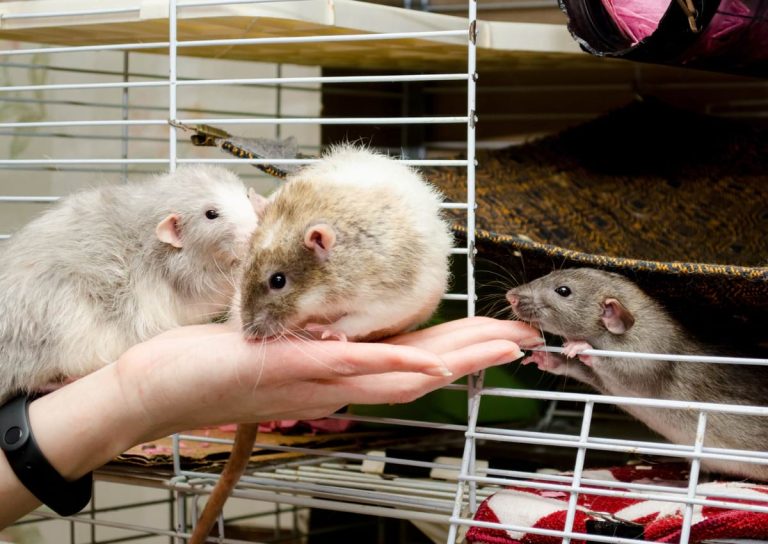
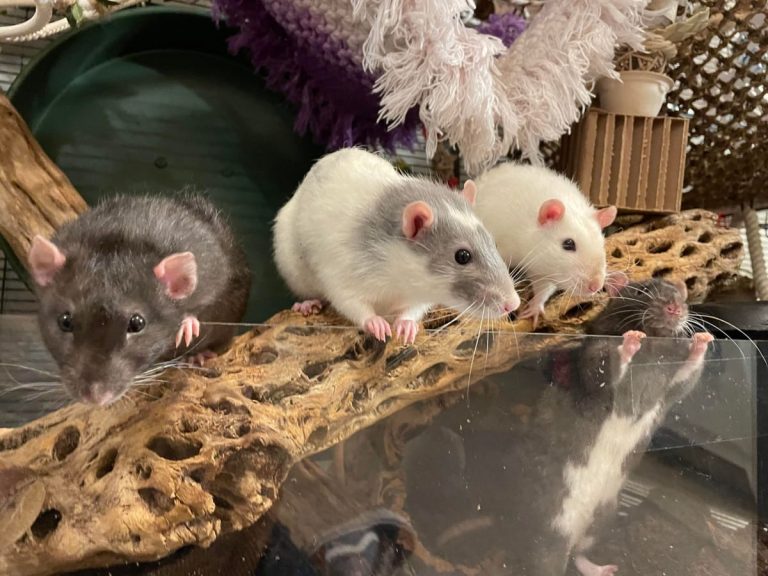


i have 2 male rats. i clean their cage every day. i take them out for free time while im cleaning. i remove everything from the cage and wash the bottom and wires with hot water and dish soap, i wash all the bedding, the litter box, food/water dishes and vacuum up all the food residue. i vacuum every nook and cranny of my room to ensure there is no dust. my little fur babies are worth every second of cleaning
But rats don’t like that at all? They love a subtle smell of their natural home.. For rats, a clean cage stinks. So cleaning their cage everyday, never gives them a smell of their own safe place..
How does one train their rats to be litter trained??
We wrote a post on that topic 🙂 You can read it here: https://www.animallama.com/rats/how-to-litter-train-rats/
This is really helpful thank you! i know a lot about rats but sometimes i just need outright instructions about the physical things like this